
Audit trails are systematic records of activities and transactions within a system. They provide a transparent and chronological log of actions, making them essential for modern business operations. By integrating audit trails into their systems, businesses can strengthen transparency and enhance security.
Audit trails are not just about record-keeping. They form the backbone of a secure and accountable business environment. From tracking system access to documenting financial transactions, they ensure every action is recorded and traceable. This capability is invaluable in preventing unauthorized access and maintaining the integrity of sensitive data.
Enhancing Compliance with Regulations
Businesses operate in an environment where compliance with regulations is non-negotiable. Audit trails for compliance play a critical role in meeting these requirements.
Regulatory frameworks like GDPR, HIPAA, and SOX demand accurate documentation of data access and modifications. Audit trails provide this documentation, ensuring businesses can demonstrate adherence to these standards. Audit trails are indispensable in sectors like healthcare and finance, where privacy and accuracy are paramount.
For instance, healthcare organizations use audit trails to track access to patient records. This ensures compliance with privacy laws and protects sensitive information. Similarly, financial institutions rely on audit trails to monitor transactions, reducing the risk of fraud and ensuring regulatory compliance.
Audit trails also support audits and inspections. Regulatory agencies often require detailed records to verify compliance. By maintaining comprehensive audit trails, businesses simplify these processes and avoid penalties. In the long run, this proactive approach to compliance reduces risks and fosters a culture of accountability.
Interested Read: Best Practices for Privacy Audits
Improving Data Security and Integrity

Data security is a top priority for enterprises. Audit trails contribute significantly to enterprise data security by monitoring and recording data interactions.
By tracking access and changes to sensitive data, audit trails help prevent unauthorized access. They ensure that every action within the system is traceable, deterring malicious activities. For example, if an employee attempts to access restricted files, the audit trail logs this activity, allowing swift action.
Audit trails also maintain data integrity. They provide a reliable record of changes, ensuring accuracy and accountability. An audit trail example could be tracking modifications to financial reports, where each change is documented with a timestamp and user details. This transparency reduces errors and builds trust within the organization.
Additionally, audit trails enable proactive monitoring. By analyzing access patterns, businesses can identify unusual activities and address potential threats before they escalate. This approach strengthens overall security and minimizes risks.
Audit trails also serve as a deterrent. Employees and external actors are less likely to engage in unethical or unauthorized activities when they know they are being monitored. This preventive measure is a cornerstone of modern data protection strategies.
Facilitating Detailed Forensic Analysis
When security breaches or compliance issues occur, businesses need detailed insights to address the problem. Audit trails enable comprehensive investigations by providing clear records of system activities.
Forensic analysis relies on audit trails to identify the source and impact of a breach. For instance, if unauthorized access compromises customer data, the audit trail reveals who accessed the data, when, and how. This information helps businesses take corrective action and prevent future incidents.
A scenario where audit trails proved invaluable involved a company detecting irregularities in its financial system. Analyzing the audit trail, the company identified and traced unauthorized transactions to a compromised account. This swift response minimized losses and restored system integrity.
Audit trails also assist in legal investigations. In fraud or data theft cases, they provide evidence supporting legal proceedings. This makes them a critical component of enterprise security strategies.
Another benefit is their role in incident reporting. Businesses can use audit trails to create detailed reports for stakeholders, ensuring transparency and accountability. These reports not only address immediate concerns but also guide future security improvements.
Streamlining Operational Efficiency
Audit trails do more than enhance security; they also improve operational processes. They streamline workflows and reduce inefficiencies by providing clear records of transactions and changes.
Different types of audit trails cater to various operational needs. For instance, system audit trails monitor user logins and software updates, while financial audit trails track transactions. Each type serves a specific purpose, helping businesses maintain organized and efficient operations.
Audit trails also simplify dispute resolution. If discrepancies arise in financial records, the audit trail accurately accounts for transactions, resolving issues quickly. This clarity saves time and resources, allowing businesses to focus on growth.
Furthermore, audit trails enhance accountability within teams. Employees are more likely to follow protocols when they know their actions are being recorded. This fosters a culture of responsibility and boosts productivity.
Audit trails can also identify bottlenecks in processes. By analyzing recorded activities, businesses can pinpoint inefficiencies and implement targeted improvements. This continuous optimization leads to smoother operations and better resource utilization.
Building Trust with Stakeholders
Transparency is crucial for building trust with customers, investors, and regulators. Maintaining robust audit trails demonstrates a commitment to accountability and security.
The benefits of audit trails extend to fostering stakeholder confidence. Customers feel reassured knowing their data is handled securely. Investors trust businesses that prioritize transparency and compliance. Regulatory bodies appreciate clear documentation, reducing the risk of penalties.
One example involves a retail company implementing audit trails to monitor its supply chain. The company improved relationships and gained a competitive edge by providing stakeholders with transparent records. This proactive approach highlighted its dedication to ethical and secure practices.
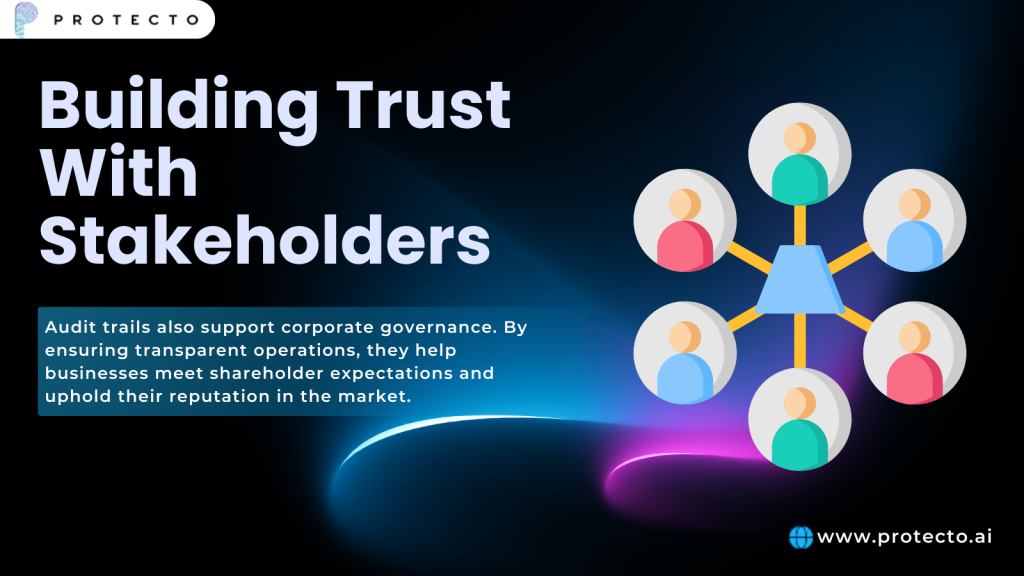
Audit trails also support corporate governance. By ensuring transparent operations, they help businesses meet shareholder expectations and uphold their reputation in the market.
Moreover, audit trails enhance customer satisfaction. When businesses can quickly resolve issues using documented records, they demonstrate reliability and professionalism. This builds long-term loyalty and strengthens brand reputation.
Conclusion
Audit trails offer unparalleled protection for businesses. They enhance compliance, strengthen enterprise data security, support forensic analysis, improve efficiency, and build stakeholder trust. By adopting audit trails, companies can safeguard against risks and operate transparently.
Protecto provides advanced solutions for managing and optimizing audit trails. Businesses can rely on Protecto to implement robust systems that protect their data and ensure compliance. Secure your operations today with comprehensive audit trail management.
