

PII (Personally Identifiable Information) refers to data that can directly or indirectly identify an individual, such as names, addresses, or phone numbers. Protecting PII data is critical, as exposure can result in identity theft, financial fraud, or privacy breaches.
With businesses collecting vast amounts of PII, proper PII data classification has become essential to safeguarding sensitive information and complying with data protection regulations. PII classification helps organizations categorize data based on sensitivity, allowing for appropriate security measures.
Understanding PII categories ensures organizations know what qualifies as sensitive data and how to secure it. Regulations like GDPR and HIPAA mandate accurate PII classification to avoid legal repercussions. Failure to comply can result in hefty penalties and damage to reputation.
Identifying and classifying PII data correctly allows businesses to protect personal information effectively, reducing risks and ensuring compliance.
Understanding PII Data Classification

PII data classification is organizing and categorizing personally identifiable information based on its sensitivity and the potential risks associated with its exposure. Proper classification ensures that sensitive PII data receives the necessary level of protection. This process is vital for maintaining data security and adhering to various regulations, such as GDPR and HIPAA.
Classifying PII data helps organizations understand which information requires the most protection. For example, highly sensitive data like Social Security numbers or credit card information must be guarded more closely than less critical data, such as email addresses. PII data classification also helps organizations define access controls, enabling them to restrict access to sensitive data and apply proper encryption.
It’s important to note the distinction between PII and PHI (Protected Health Information). While both fall under the umbrella of data classification, PII refers to general personal information, whereas PHI deals with health-related data. PHI is subject to stricter regulations, especially in healthcare industries, where compliance with HIPAA is mandatory.
By understanding PII classification, businesses can develop robust security protocols and comply with legal standards. This reduces the likelihood of data breaches and enhances overall data privacy. Effective PII classification is an essential step toward protecting both the business and the individuals whose data they hold.
Types of PII Data
PII data can be categorized into two main types: sensitive and non-sensitive PII.
This classification helps organizations apply the proper security measures to protect information and comply with regulations.
Sensitive PII refers to data that, if disclosed, could cause harm to an individual. Examples include Social Security numbers, passport numbers, credit card details, and biometric data. These types of personally identifiable information can be used to commit identity theft or fraud, making their protection crucial. Sensitive PII data must be encrypted and carefully monitored, with access restricted to authorized personnel only.
On the other hand, non-sensitive PII includes data that, on its own, does not pose a risk to an individual. This includes information like names, addresses, and phone numbers. However, even non-sensitive PII can become a security risk when combined with other data. For example, an address linked with a Social Security number can be used for malicious purposes.
There are also four types of sensitive data that require special attention: financial data, health data, government-issued identifiers, and biometric information. These categories require the highest level of protection, as exposure can lead to significant consequences for the individuals involved. Understanding these PII categories helps businesses prioritize their security measures.
Classifying PII data into these types and categories enables organizations to manage risk effectively. Implementing strict controls over sensitive PII data ensures legal compliance and robust PII data security. Proper classification of all types of PII data is key to minimizing the risk of data breaches and protecting individuals’ privacy.
Key Best Practices for PII Data Classification
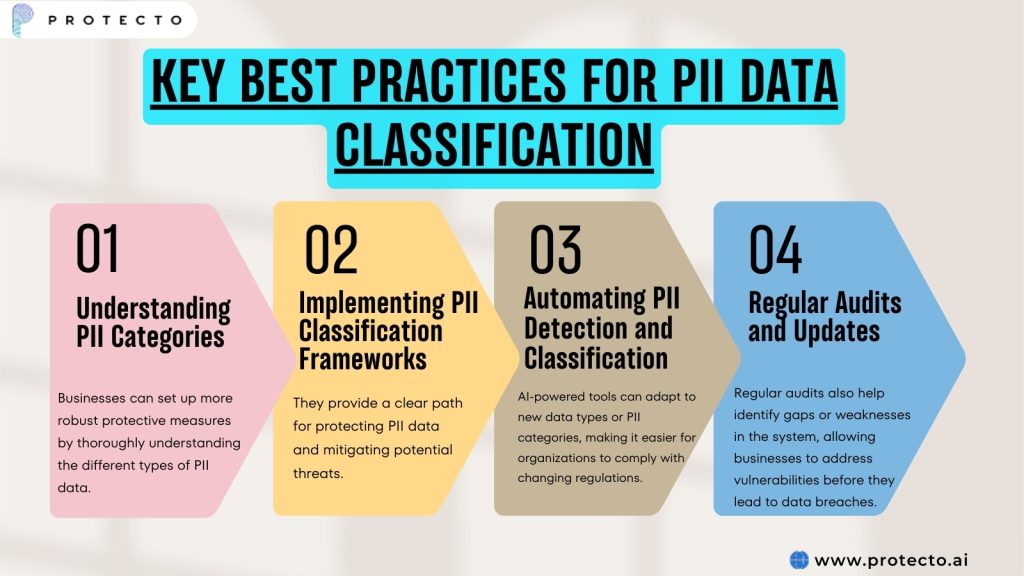
Understanding PII Categories
Understanding the different PII categories is one of the first steps in effective PII data classification. Broadly, PII data is divided into sensitive and non-sensitive categories, but within these, various types of personally identifiable information require careful consideration.
Sensitive PII data includes information that could directly identify an individual or expose them to risk if disclosed. Examples include government-issued identifiers like Social Security numbers, passport details, and health records. This data demands the highest level of protection, as breaches could lead to identity theft, financial fraud, or privacy violations.
Non-sensitive PII, on the other hand, refers to information that, in isolation, does not pose a high risk to an individual. However, when combined with other types of PII, it can become sensitive. Names, addresses, and phone numbers fall into this category. To ensure PII data security, organizations must first identify what types of personally identifiable information they collect and classify them accurately. Misclassifying PII categories can lead to improper protection and compliance failures.
Businesses can set up more robust protective measures by thoroughly understanding the different types of PII data. Organizations should also consider the specific context in which PII data is used, as certain data might be regarded as sensitive in one scenario but not in another.
Implementing PII Classification Frameworks
Once the categories of PII are understood, the next step is to implement proper classification frameworks. These frameworks offer structured ways to categorize and handle PII data, ensuring compliance with regulations and improving security practices. Popular frameworks include those outlined by laws such as GDPR (General Data Protection Regulation) and HIPAA (Health Insurance Portability and Accountability Act).
Under GDPR, organizations must classify personal data into distinct categories, such as identifiers (e.g., names, Social Security numbers), individual characteristics (e.g., gender, age), and sensitive information (e.g., health data, religious beliefs). The framework ensures that PII data is stored and processed securely. HIPAA, similarly, provides guidelines for managing health-related PII and ensures that organizations protect patients’ privacy through proper PII data classification and handling practices.
Following these frameworks helps businesses stay compliant with laws while minimizing risk. They provide a clear path for protecting PII data and mitigating potential threats. Additionally, adhering to these standards shows a commitment to PII data security, which can boost customer trust.
Automating PII Detection and Classification
In today’s digital landscape, organizations collect a massive amount of PII data. Manual classification is often time-consuming and prone to errors. To address these challenges, many businesses are turning to automation. Automated PII detection and classification tools use advanced algorithms and AI to quickly identify and categorize different types of data.
The benefits of automation in PII classification are significant. First, it drastically reduces the time required to classify data. Instead of relying on manual checks, automated systems can scan huge volumes of data in real-time, flagging potential PII or sensitive information. This ensures that no PII data goes unnoticed. Second, automation reduces the risk of human error. Mistakes in manual classification can lead to security breaches or non-compliance with regulations. Automated tools can ensure consistent accuracy.
Additionally, AI-powered tools can adapt to new data types or PII categories, making it easier for organizations to comply with changing regulations. With these tools, businesses can maintain high standards of PII data security without constantly updating manual processes.
Regular Audits and Updates
Even with the best PII classification systems in place, regular audits are essential to maintain security. Data protection laws and regulations are constantly evolving, and what qualifies as PII data today may change tomorrow. Conducting regular audits helps organizations ensure their classification methods are up-to-date and effective.
During audits, organizations should evaluate their entire PII data classification process, from identifying data to protecting it. This includes reviewing automated systems and manual processes to ensure they function correctly. Regular audits also help identify gaps or weaknesses in the system, allowing businesses to address vulnerabilities before they lead to data breaches.
Keeping the classification system updated with changing regulations is also crucial. As new laws emerge or existing ones are amended, the definitions of sensitive PII data or non-sensitive PII may shift. Organizations must adjust their classification processes to reflect these changes, ensuring continued compliance and protection of all types of PII.
Incorporating regular audits and updates into the PII classification strategy is a regulatory requirement and a best practice. It ensures that security remains strong, even as the data landscape changes.
Businesses can significantly enhance their PII data classification processes by breaking down PII categories, implementing effective frameworks, leveraging automation, and conducting regular audits. These best practices ensure regulatory compliance and robust protection for sensitive information. Data breaches can be costly and damaging, but organizations can minimize risk and keep sensitive PII data secure with the right approach to PII classification.
Protecto – The Optimal DLP Solution for PII Classification
Protecto is an optimal Data Loss Prevention (DLP) solution that enhances PII data classification by offering intuitive data discovery, real-time protection, and compliance support. It seamlessly integrates with existing systems, ensuring robust PII data security. User engagement and training are crucial to maximizing the solution’s effectiveness, enabling teams to handle different PII categories and types of PII data efficiently. By providing continuous monitoring and automated alerts, Protecto reduces data breach risk and enhances compliance with data protection regulations.
Conclusion
Effective PII data classification is crucial for ensuring data security and regulatory compliance. Following best practices safeguards sensitive PII data and mitigates risk.

